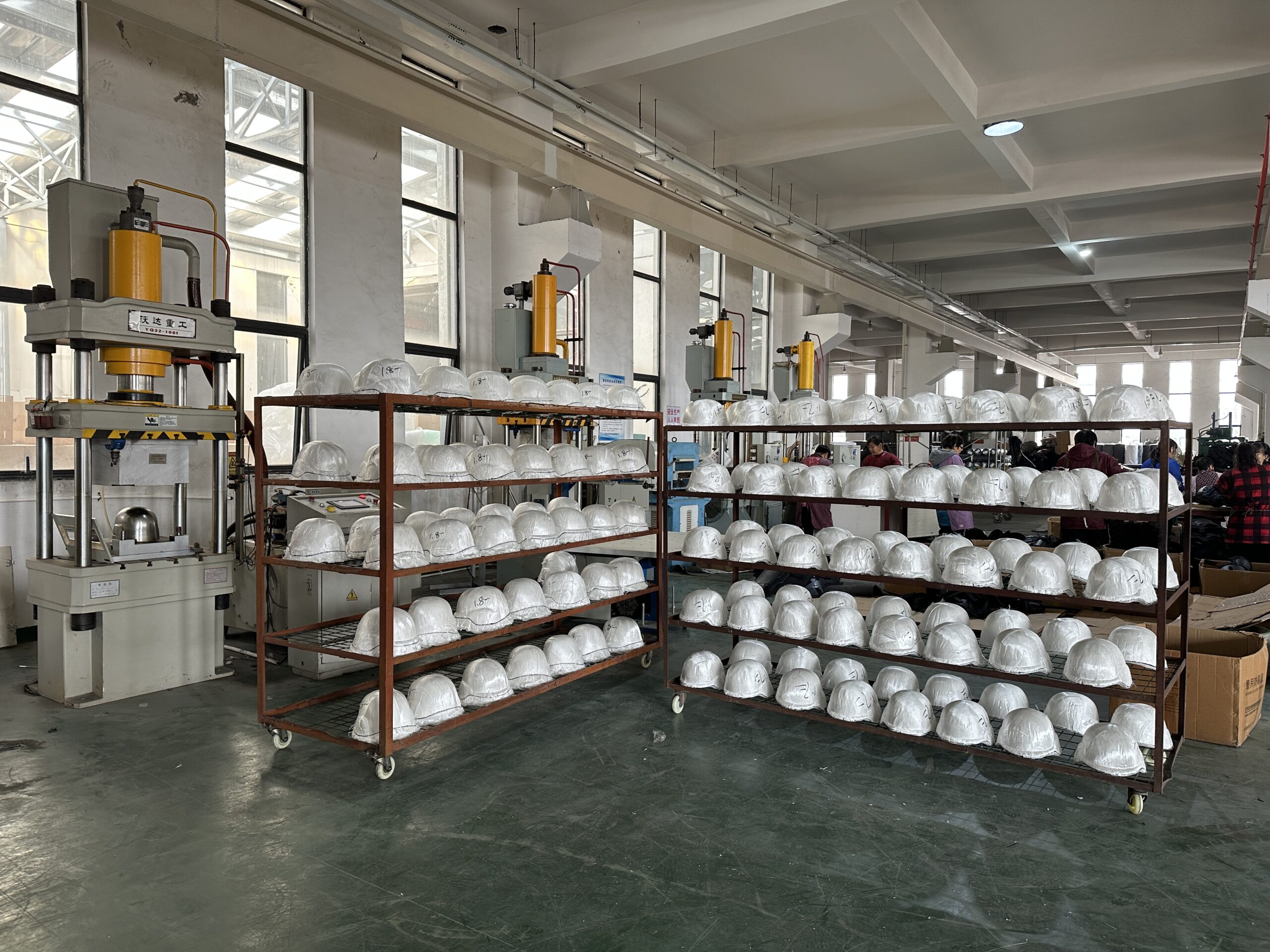
Riot shield formations have long resembled forests of steel, walls of black. Yet recently, a newly manufactured batch of white riot helmets is quietly altering this solidified landscape. They no longer conceal themselves in somber dark hues but spread out like moonlight, allowing riot gear—traditionally considered an “instrument of force”—to reveal an unprecedented clarity of form and complex significance.
White is, first and foremost, a bold declaration of technology. In scenes filled with smoke, dust, and chaos, black helmets may aid concealment but create difficulties for command identification and friendly force positioning. These white helmets are far from a simple color change. Their surfaces are coated with a special nano-layer, possessing excellent anti-impact, corrosion-resistant, and self-cleaning properties. More crucially, the high reflectivity of white can effectively dissipate thermal energy, providing additional protection against fire attacks like Molotov cocktails. Miniature cameras, communication modules, and vital sign monitoring sensors are ingeniously integrated, with the white shell serving as an ideal “canvas” and heat dissipation substrate for these precision electronic components. Inside the helmet, an adaptive buffer system can absorb and disperse up to 70% of impact force. Here, white becomes a “visible resilience,” proclaiming that protection has advanced from passive endurance to a new era of intelligent response.
If the innovation were merely technological, its significance would remain incomplete. The deeper impact of the white helmet lies in its visual and psychological reconstruction of the very concept of “riot control.” Traditional black gear is easily associated with imagery of “oppression,” “deterrence,” or even “repression.” The pure white, while not diminishing professionalism or authority, lightens the visual load, conveying semantics of calm, order, and even “protection.” For law enforcement officers, this touch of white might serve as a silent professional reminder: strength must coexist with restraint, and authority should align with transparency. For the public, especially at tense moments of confrontation, a conspicuous white line might create more space for rational dialogue by reducing misjudgment and de-escalating confrontational instincts compared to a black tide. It is like turning the inner side of the shield toward the public—it remains a shield but attempts to reveal its original intent to protect.
Thus, this batch of white riot helmets becomes a modern symbol fraught with tension. It is both a proud product of advancements in materials science and engineering, and an iteration in the aesthetics of power display. It embodies hopes for a more professional and humane form of law enforcement, yet inevitably raises vigilance against technological alienation and the ornamentation of power. It is like a modern “mirror,” reflecting our relentless pursuit of safety, order, and technological progress, while also compelling us, as we admire this cold “moonlight,” to examine the complex realities it covers: true public safety ultimately does not depend on the color of a helmet or the level of technology, but on institutional justice, procedural transparency, restrained power, and social consensus. When moonlight falls upon the shields, we hope it illuminates a path toward understanding and order, rather than merely bestowing upon cold equipment a soft yet distant glow.